Showing posts with label japanese history. Show all posts

Momoyama Period (1573 - 1615)


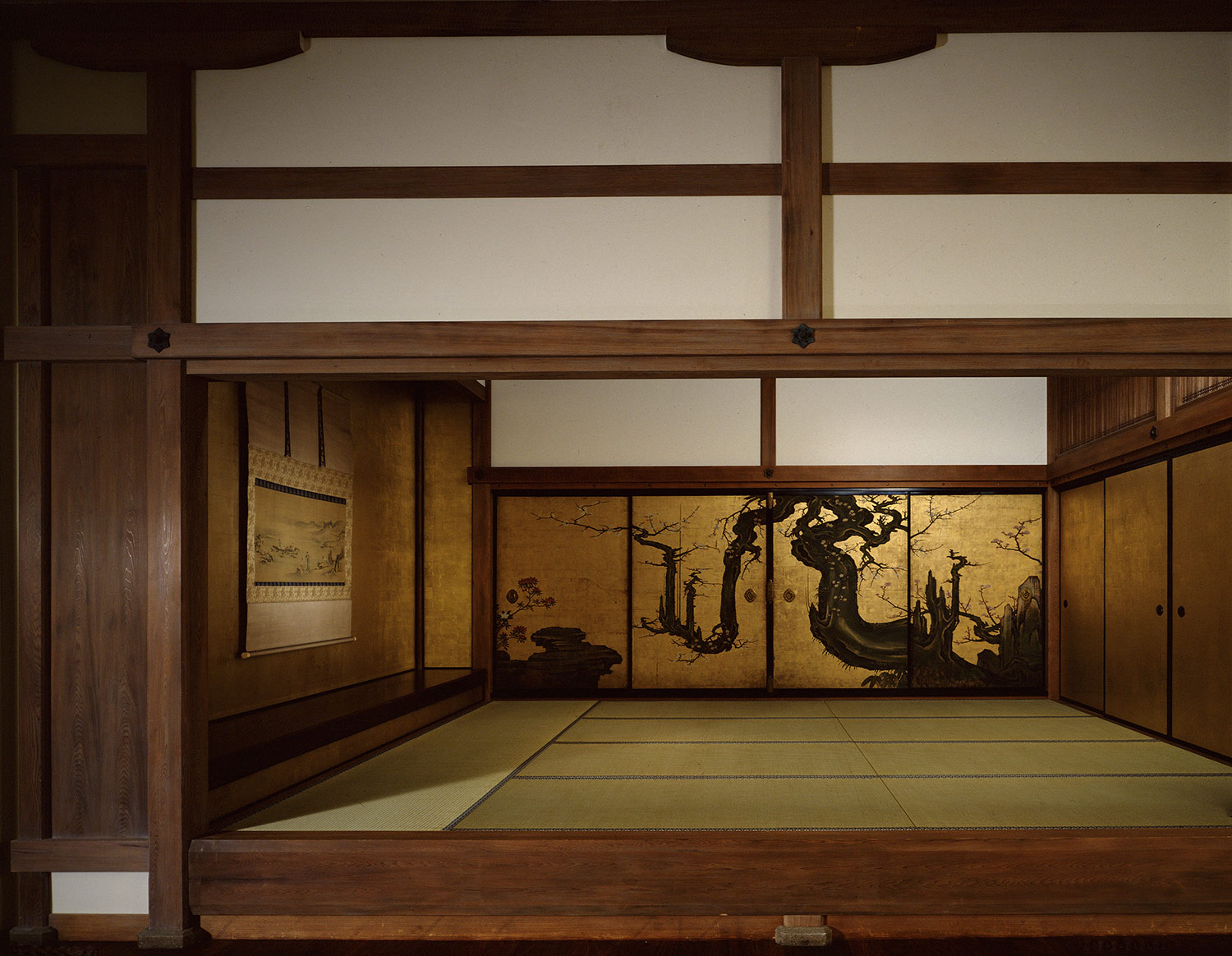
With the decline of Ashikaga power in the 1560s, the feudal barons, or daimyos, began their struggle for control of Japan. The ensuing four decades of constant warfare are known as the Momoyama (Peach Hill) period. The name derives from the site, in a Kyoto suburb, on which Toyotomi Hideyoshi (1536–1598) built his Fushimi Castle. Unity was gradually restored through the efforts of three warlords. The first, Oda Nobunaga (1534–1582), took control of Kyoto and deposed the last Ashikaga shogun through military might and political acuity. He was followed by Toyotomi Hideyoshi, who continued the campaign to reunite Japan. Peace was finally restored by one of Hideyoshi's generals, Tokugawa Ieyasu (1542–1616).


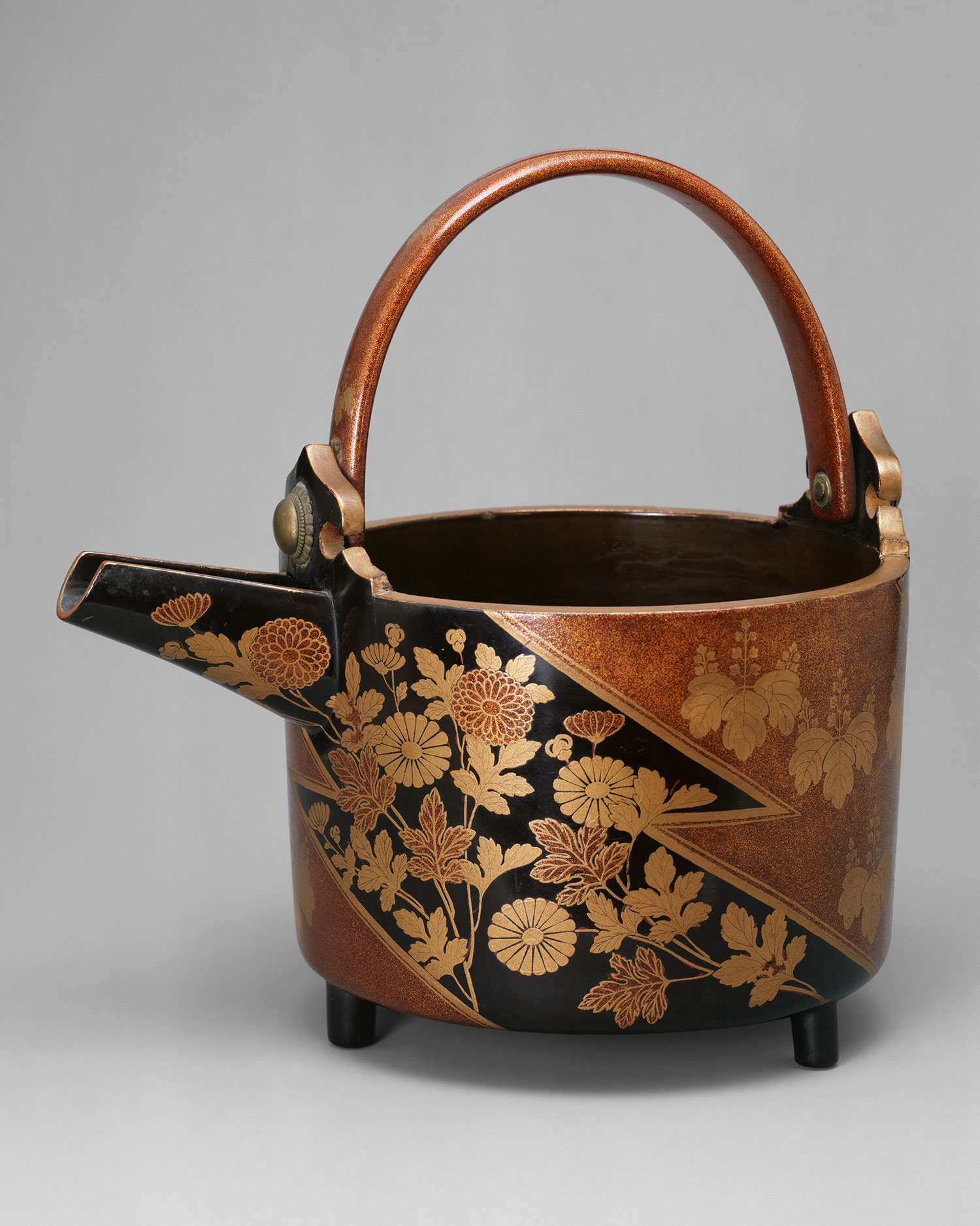
The decorative style that is the hallmark of Momoyama art had its inception in the early sixteenth century and lasted well into the seventeenth. On the one hand, the art of this period was characterized by a robust, opulent, and dynamic style, with gold lavishly applied to architecture, furnishings, paintings, and garments. The ostentatiously decorated fortresses built by the daimyo for protection and to flaunt their newly acquired power exemplified this grandeur. On the other hand, the military elite also supported a counter-aesthetic of rustic simplicity, most fully expressed in the form of the tea ceremony that favored weathered, unpretentious, and imperfect settings and utensils.


During this era, the attention of the Japanese was more than usually drawn beyond its shores. In addition to the continued trade with and travel to and from China and Korea, Toyotomi Hideyoshi instigated two devastating invasions of the Korean peninsula with the ultimate goal of invading China. The arrival of Portuguese and Dutch merchants and Catholic missionaries brought an awareness of different religions, new technologies, and previously unknown markets and goods to Japanese society. Over time, these foreign influences blended with native Japanese culture in myriad and long-lasting ways.


Department of Asian Art, The Metropolitan Museum of Art


Origami


Origami is the ancient art of Japanese paper folding, an art form spanning over 1,000 years.
A folk art, a creative art, a mathematical puzzle, a game-- all of these terms describe origami. Some people are attracted to origami for its simplicity, while others marvel at the minds of people who can devise the patterns for such ingenious creations. Some look to origami as a way to entertain, while others find it has a calming, relaxing effect.

Origami is unique among paper crafts in that it requires no materials other than the paper itself. Cutting, gluing, or drawing on the paper is avoided, using only paper folding to create the desired result. No special skills or artistic talent are needed for origami, although a good amount of patience and perseverance are very helpful. Models can be folded by following instructions exactly. Experimenting with different folds may lead to a totally new, original paper-fold.

The word "origami" comes from the Japanese language. "Ori" means folded and "kami" means paper. Paper-folding as a traditional folding art pervaded the Japanese culture more strongly than any other. But traditional paper-folding did not exist in Japan alone.

Papermaking was developed in China two thousand years ago but the Chinese did not readily share this knowledge. It eventually traveled to Korea and then Japan by the seventh century. This "trade secret" then spread in the direction of the Arab world, reaching Spain by the twelfth century.

Origami was first practiced in the Japanese imperial Court, where it was considered an amusing and elegant way of passing the time. Over the centuries the skill has been passed down to ordinary people, who took it up with enthusiasm and made it into the folk art that it is today. Today in Japan the art of paper-folding is as widely practiced by children, parents and grandparents as it was centuries ago. And for a number of years now origami has been immensely popular here in the western world.

During this journey, did simple paper-folding spread with the knowledge of papermaking? Or did each country independently discover that paper could not only be written and drawn on, but manipulated into forms? Despite the fact that some traditional models from different paper-folding traditions are similar, most people believe that each tradition developed its own paper-folding ideas.

Creative Paper-folding:

Today, origami is an international creative pastime. Building upon the basics of the traditional designs, many folders follow the creative path of leaders such as Master Akira Yoshizawa and philosopher Miguel de Unanmuno, devising their own new designs. The repertoire of a couple hundred traditional folds in the beginning of the twentieth century has grown to over tens of thousands now with endless number yet to be discovered.

Originally considered a child's activity origami now attracts the interest of mathematicians, engineers, scientists, computer programmers, college professors and professional artists. It is an art form than can be practiced by preschoolers to senior citizens, those who are hospitalized, handicapped, or blind, those who wish to share a craft with a group of friends, and those who wish to explore the infinite possibilities of paper-folding.

This excerpt is taken from The Art of Origami by Gay Merrill Gross.

Search This Blog

Blog Archive