Showing posts with label momoyama period. Show all posts

Momoyama Period (1573 - 1615)


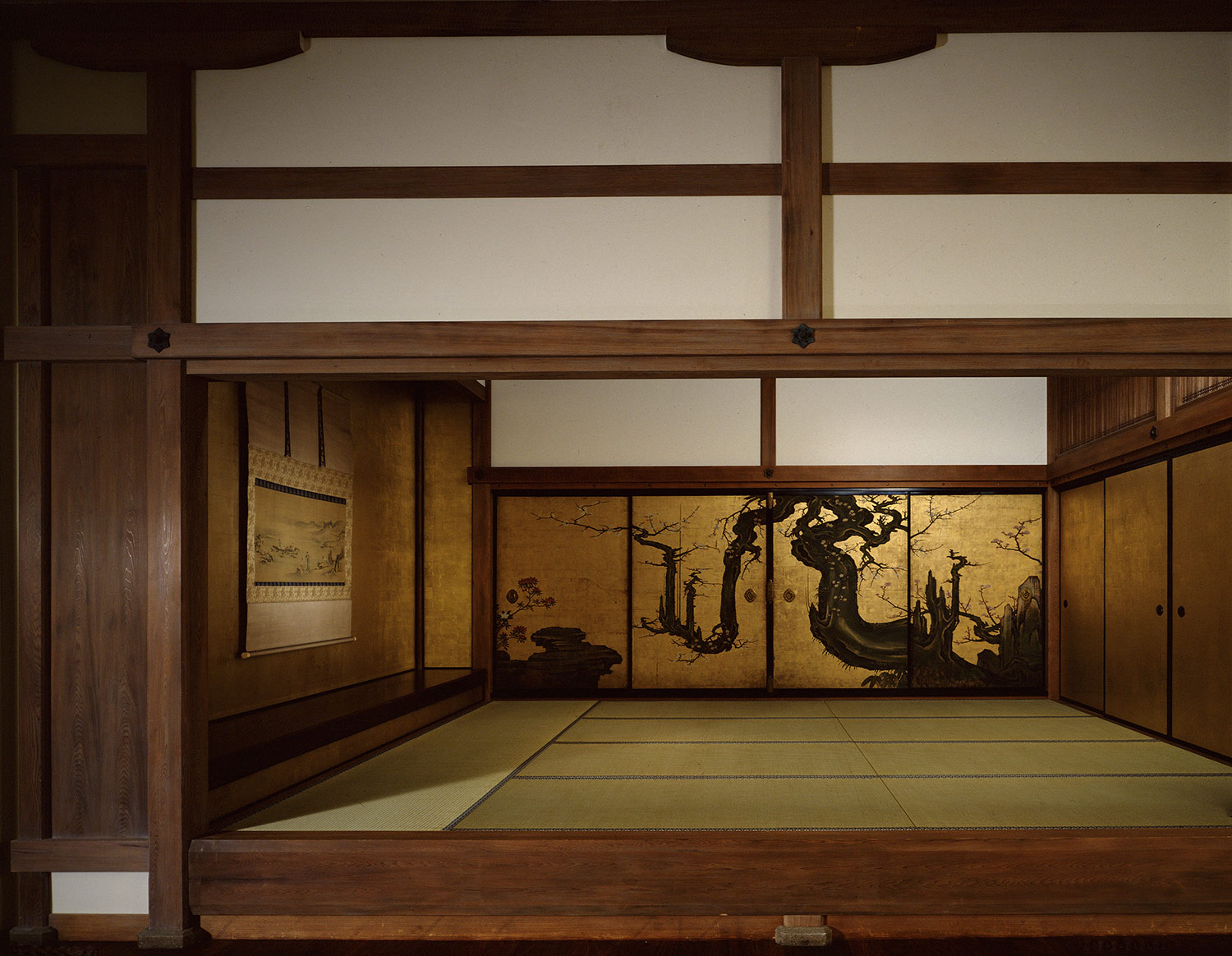
With the decline of Ashikaga power in the 1560s, the feudal barons, or daimyos, began their struggle for control of Japan. The ensuing four decades of constant warfare are known as the Momoyama (Peach Hill) period. The name derives from the site, in a Kyoto suburb, on which Toyotomi Hideyoshi (1536–1598) built his Fushimi Castle. Unity was gradually restored through the efforts of three warlords. The first, Oda Nobunaga (1534–1582), took control of Kyoto and deposed the last Ashikaga shogun through military might and political acuity. He was followed by Toyotomi Hideyoshi, who continued the campaign to reunite Japan. Peace was finally restored by one of Hideyoshi's generals, Tokugawa Ieyasu (1542–1616).


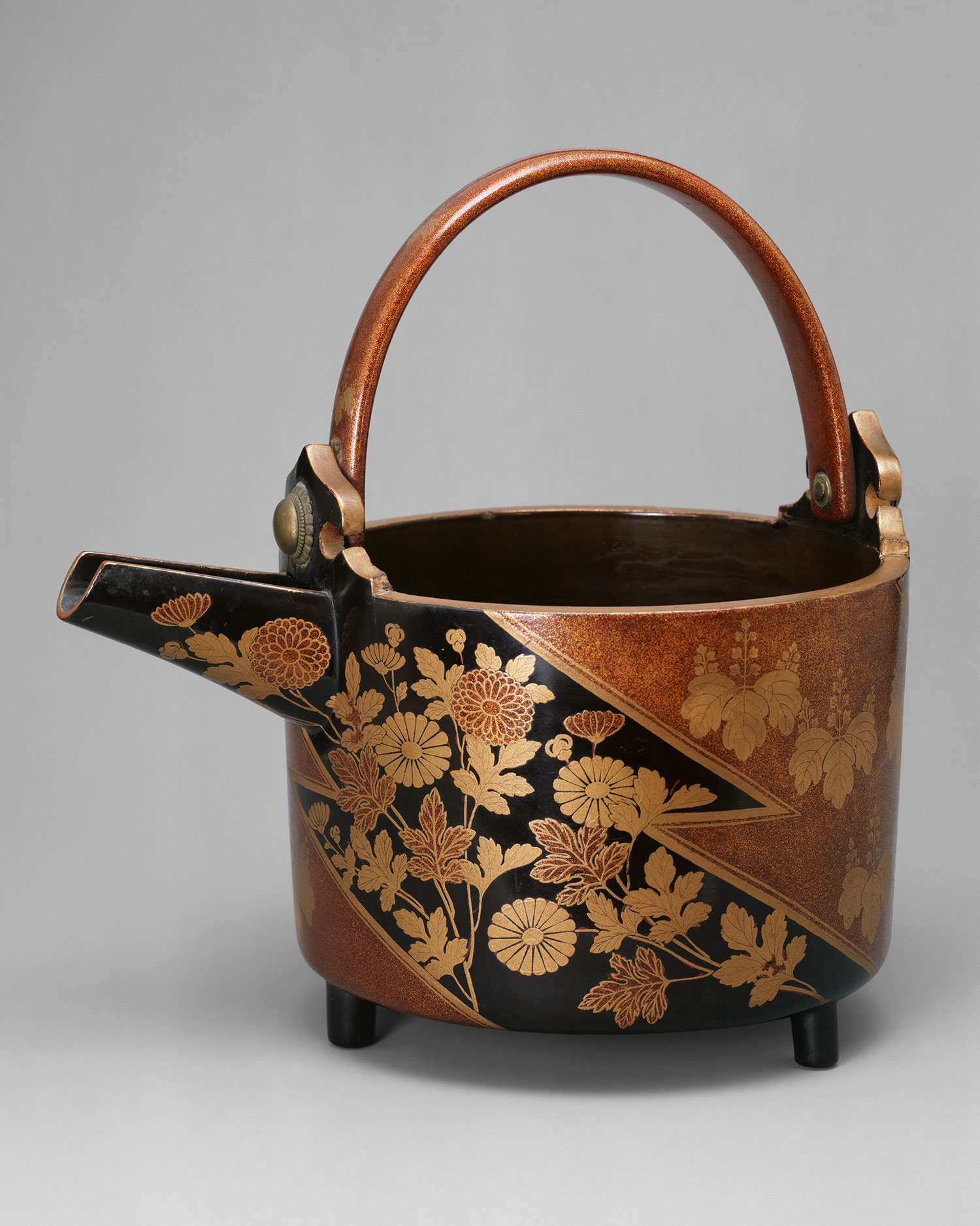
The decorative style that is the hallmark of Momoyama art had its inception in the early sixteenth century and lasted well into the seventeenth. On the one hand, the art of this period was characterized by a robust, opulent, and dynamic style, with gold lavishly applied to architecture, furnishings, paintings, and garments. The ostentatiously decorated fortresses built by the daimyo for protection and to flaunt their newly acquired power exemplified this grandeur. On the other hand, the military elite also supported a counter-aesthetic of rustic simplicity, most fully expressed in the form of the tea ceremony that favored weathered, unpretentious, and imperfect settings and utensils.


During this era, the attention of the Japanese was more than usually drawn beyond its shores. In addition to the continued trade with and travel to and from China and Korea, Toyotomi Hideyoshi instigated two devastating invasions of the Korean peninsula with the ultimate goal of invading China. The arrival of Portuguese and Dutch merchants and Catholic missionaries brought an awareness of different religions, new technologies, and previously unknown markets and goods to Japanese society. Over time, these foreign influences blended with native Japanese culture in myriad and long-lasting ways.


Department of Asian Art, The Metropolitan Museum of Art


Gift Of Conservation From Japan Comes To Houston Museum

In January 2009, the Museum of Fine Arts, Houston, will unveil a pair of 17th-century six-paneled screens from its permanent collection newly restored by conservation experts in Japan.
The screens were among only nine objects selected last year from prestigious Asian collections around the world for a competitive conservation program overseen by Japan’s National Research Institute for Cultural Properties.

The MFAH will present the transformed screens, last shown at the museum in 2005, in Art Unfolded: The Gift of Conservation from Japan from January 17 through February 22, 2009 in the Caroline Wiess Law Building. The exhibition will feature a presentation describing the conservation process, including materials used, and a video of the Hie Sanno festival depicted on the screens. The screens, titled Hie Sanno Sairei-Zu, will eventually be the centerpiece of a new MFAH gallery devoted to Japanese art scheduled to open in winter 2009-2010.

Conservators at the Association of Conservation for National Treasures, Kyushu Branch Studio at the Kyushu National Museum, carefully implemented their conservation of the Hie Sanno screens over nine months. They treated the painted panels of the screen for surface damage and pigment deterioration, replaced the backing and border fabrics of the panels, and reattached the original metal fittings.

"Japan’s passion for the preservation of tradition and art is well-recognized, and the museum is fortunate to be the recipient of that passion," said Wynne Phelan, MFAH conservation director. "The masterful work of the Kyushu experts has guaranteed the long-term preservation of the screens."

The Hie Sanno Sairei-Zu screens derive from the practice of painting panoramic views of the city of Kyoto and its environs that evolved in the 16th century. Festival screens adopt the same elevated vantage point and panoramic presentation as city view paintings, but also have a unique narrative and anecdotal quality. Festival screens became an independent subject matter in the Momoyama period (1573-1615), and are often remarkably faithful to the topography and events being portrayed.

The Hie Sanno festival is held every April in tribute to peace and a rich harvest. It dates from 1072 and takes place at the Hiyoshi Taisha Shrine in Sakamoto, an historic village on Lake Biwa that lies at the foot of Mount Hie, near Kyoto. Sairei in the title of the screens means festival and Zu means diagram or illustration.

The MFAH screens, each about 5 feet by 12 feet, describe the village and shrine complex set against the beautiful landscape around Lake Biwa. The narrative of the screen reads right to left. The upper middle part of the right screen shows the Hiyoshi Taisha Shrine complex. A distinctive large red gate (torii) marks the boundary of the shrine’s sacred space.

The Jinko-sai, the great procession of large portable shrines from other villages, departs through the Hiyoshi Taisha Shrine’s red gate toward Sakamoto. The heavy shrines are transported by many men as other men on horseback oversee the proceedings. In the left screen, villagers watch as the portable shrines are carried onto boats on Lake Biwa to return to their villages.
Hie Sanno Sairei-Zu was given to the museum in 1996 as a bequest of Mrs. Dudley C. Sharp, Sr., who was a generous supporter of Asian art at the MFAH. -- www.mfah.org

http://www.huliq.com/13/74758/gift-conservation-japan-comes-houston-museum

Search This Blog

Blog Archive